

Ever wonder if your money is really working for you? Building an investment portfolio is a bit like planning a road trip, you need a clear map to reach your destination.
In this guide, we’ll share some simple steps to turn your worries into a plan you can count on. Think of it like tweaking your favorite recipe; even a few small changes can help smooth out those unexpected bumps in the market.
Ready to set off on the journey to a secure future? Let’s break it down together and craft a portfolio that fits your life perfectly.
Step-by-Step Guide to Building Your Investment Portfolio

Taking a methodical approach to your investments is a lot like planning a road trip. You wouldn’t set out without a map, right? A clear plan gives you the confidence to handle market ups and downs while keeping your investment choices in line with your personal goals. For instance, even a small, well-thought-out change in your asset mix can help smooth out market bumps and boost your long-term growth.
There are four simple steps to build a strong portfolio. First, decide on clear financial goals, maybe you’re saving for retirement, planning to buy a home, or setting aside funds for education. Next, figure out your risk tolerance (that is, how much market ups and downs you can handle). Then, work out your asset allocation using the “rule of 100” (subtract your age from 100 to get the percentage of stocks) to strike the right balance between risk and reward. Finally, plan to regularly rebalance your portfolio so that as market values change, your strategy stays sharp.
Up next, we’ll explore each asset type in more detail, stocks, bonds, real estate, cryptocurrency, and money market tools. We’ll share easy tips and practical tools to help you fine-tune your mix so that you can move steadily toward your financial goals while keeping the process simple and manageable.
Comparing Asset Classes for Your Investment Portfolio
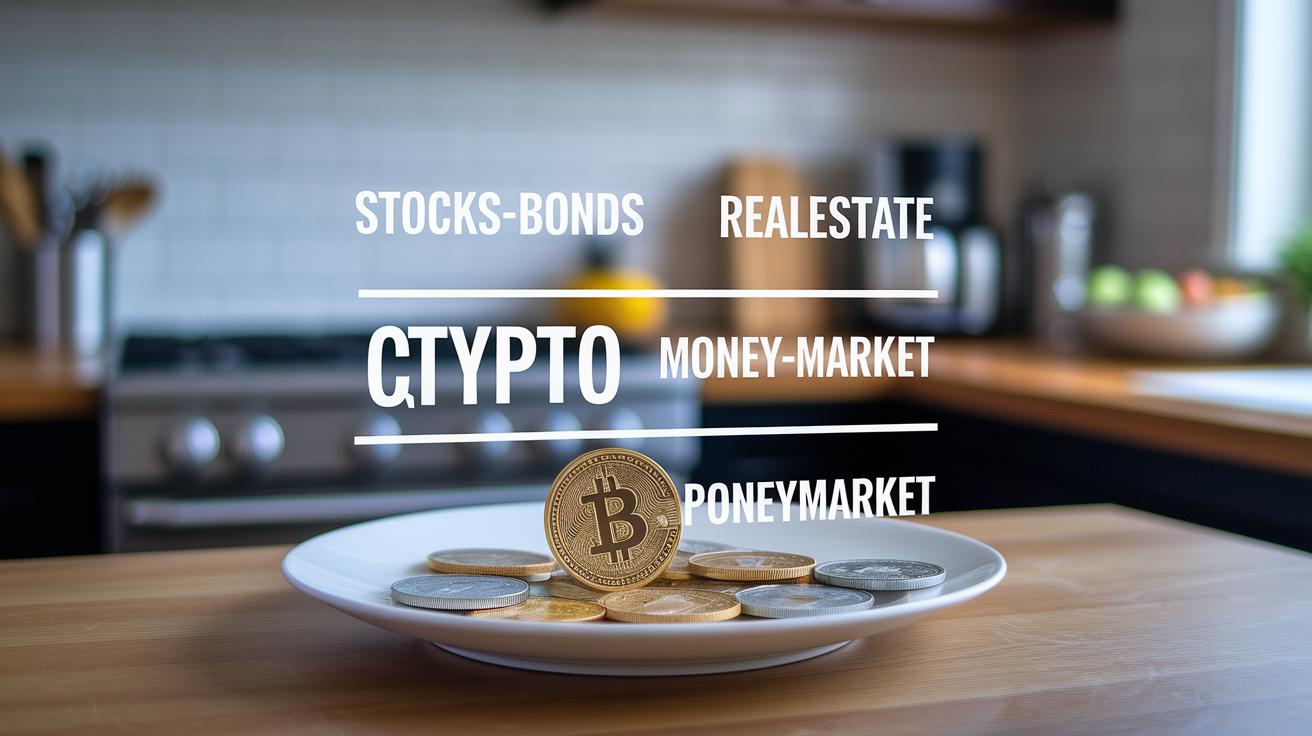
Imagine your portfolio like a balanced meal where every ingredient has its special role. Mixing different asset types helps you manage risk while still chasing growth. If you want a quick rundown, check out what is an investment portfolio. By knowing how each asset works, you can spread your money across options that vary in risk and reward.
Stocks usually bring an average of about 10% per year, but they can be risky, especially if you sell during a slump. Bonds, such as Series I U.S. government bonds, tend to yield around 6.89% and can offer a steady income when you account for inflation. Real estate typically means putting down 20–30% of the cost upfront, plus extra for repairs and upkeep. Cryptocurrencies like Bitcoin can jump from highs near $65,500 to lows around $16,200, which is why it may be best to use them in small amounts. Money market tools like CDs provide modest returns but might charge fees if you withdraw early.
| Asset Class | Risk Profile | Average Return | Notes |
|---|---|---|---|
| Stocks | High | ~10% annually | High potential but can be volatile |
| Bonds | Low to Moderate | 6.89% | Steady income with inflation adjustments |
| Real Estate | Moderate to High | Varies | Requires a sizable down payment and extra costs |
| Cryptocurrency | Very High | Varies Widely | Prone to extreme price swings |
| Money Market | Low | Modest | Fixed term investments with early withdrawal penalties |
Assessing Risk when Building an Investment Portfolio

First, get a clear idea of your own risk tolerance. Take a look at your finances, think about how long you plan to invest, and check how comfortable you are with the market's ups and downs. For example, someone in their 30s might be okay with having more stocks since they can handle short-term dips, while those closer to retirement might lean toward bonds for steadier returns.
A handy tip is to keep risky assets like cryptocurrency to just a small part of your overall plan. This small slice can help soften the blow during wild market swings. And you know what? Missing just the 10 best market days could slash your returns over ten years nearly in half. It really shows how sticking to your plan matters. For more ideas on managing risk while aiming for better returns, you might want to look into some risk mitigation strategies.
Another smart move is to use tax-friendly methods. Tax-advantaged accounts like 401(k)s or traditional and Roth IRAs can be really beneficial. If you’re in a higher tax bracket, municipal bonds could also be a good option. These methods help protect your gains, so more of your money stays with you in the long run.
Selecting ETFs and Passive Options for Your Investment Portfolio

ETFs and index funds make it easy and affordable to spread out your investments. They save you from micromanaging your portfolio and often come with lower fees, meaning you might even beat active funds after costs. With one simple purchase, you can invest in a broad mix of stocks, bonds, or other assets, so no single choice can drag you down too hard.
When you’re picking these passive options, think about what matches your comfort with risk and your long-term goals. For example, dollar-cost averaging, investing a fixed amount on a regular schedule, can help smooth out the bumps of market ups and downs. You might start with a core total-market ETF, like the Vanguard Total Market fund, and then add a few sector-focused ETFs to grab some extra opportunities. This balanced plan can help your investments grow steadily while keeping things simple to manage.
Utilizing Tools and Platforms to Build Your Investment Portfolio

Robo-advisors make managing your investments really simple. They round up your transactions and handle tasks like keeping your mix balanced, reinvesting dividends, and even managing tax-related details automatically. They work quietly in the background so you can concentrate on your daily routine. Imagine a scenario where your investments adjust themselves whenever the market shifts, no extra effort from you!
For those who like a hands-on approach, custom spreadsheet templates and online calculators can be ideal. You get to experiment by entering different scenarios and watching how small changes impact your portfolio. It’s like testing out a recipe where you mix different ingredients to see which one tastes best. These tools help you try out various strategies and get a clear picture of how different factors interact with your investments.
Interactive platforms take things a step further by bringing all your retirement accounts together in one neat dashboard. They offer visual snapshots and even send you alerts when your asset mix drifts from your plan. This way, you can quickly adjust your holdings without the need for constant manual checks, keeping your investment strategy on track with ease.
Rebalancing and Reviewing Your Investment Portfolio

Keeping an eye on your portfolio helps you stay on track with your risk and reward goals. Over time, changes in the market can shift your investments, so it’s a good idea to check and adjust your asset mix once or twice a year. By staying fully invested during ups and downs, you can make sure you don’t miss out on the best days, which could boost your long-term results. Whether you let a robo-advisor do the work or you make adjustments by hand, these simple steps will help keep your investments aligned with your plan.
- Compare your current weights with your target percentages.
- Sell off any assets that are more than about 5% above your target.
- Use the money from those sales to add to the areas where you’re underweight.
- Remember to think about any tax effects if you’re trading in taxable accounts.
- Set a date for your next review and, if you can, set automatic reminders to help you keep on schedule.
Final Words
In the action, we broke down key steps to build your investment portfolio, from setting clear goals and weighing risks to comparing asset classes and choosing cost-effective ETFs. We also reviewed digital tools that simplify managing your finances and keeping your mix in check through regular rebalancing.
This guide shows you how to build an investment portfolio by blending practical steps with smart tech. Stay confident and enjoy the process of growing your financial potential.
FAQ
How to build an investment portfolio for beginners?
Building an investment portfolio for beginners involves setting clear goals, assessing risk tolerance, choosing a balanced mix of assets, and regularly reviewing allocations to steadily grow your nest egg.
How can I find investment portfolio examples and builders?
Investment portfolio examples show models like balanced mixes and the five-fund approach. These blueprints help you understand allocations and offer a framework for creating your own diversified portfolio.
What is the 10/5/3 rule of investment?
The 10/5/3 rule of investment provides guidelines for periodic reviews and rebalancing. It suggests checking your portfolio regularly and adjusting allocations when deviations hit set percentage limits to maintain balance.
How much is $1,000 a month invested for 30 years?
Investing $1,000 a month over 30 years can compound significantly. With average market returns around 7%, you could see a sizable nest egg, often roughly around $1 million by retirement.
How much money do I need to invest to make $3,000 a month?
Earning $3,000 monthly from your investments depends on expected returns. Accumulating between $600,000 and $1 million is a common benchmark, though individual needs may vary with market conditions.
What is the 7 3 2 rule?
The 7 3 2 rule offers a guideline for portfolio allocation, suggesting a focus on predominantly growth assets, complemented by income-oriented securities, plus a minor reserve for stability or cash needs.
How can I build an investment portfolio using Fidelity?
Building a portfolio with Fidelity involves setting your financial goals, using their risk assessment tools, and choosing low-cost, diversified asset options to construct a balanced mix that suits your personal profile.